Do you need a COSHH assessment for cleaning products?
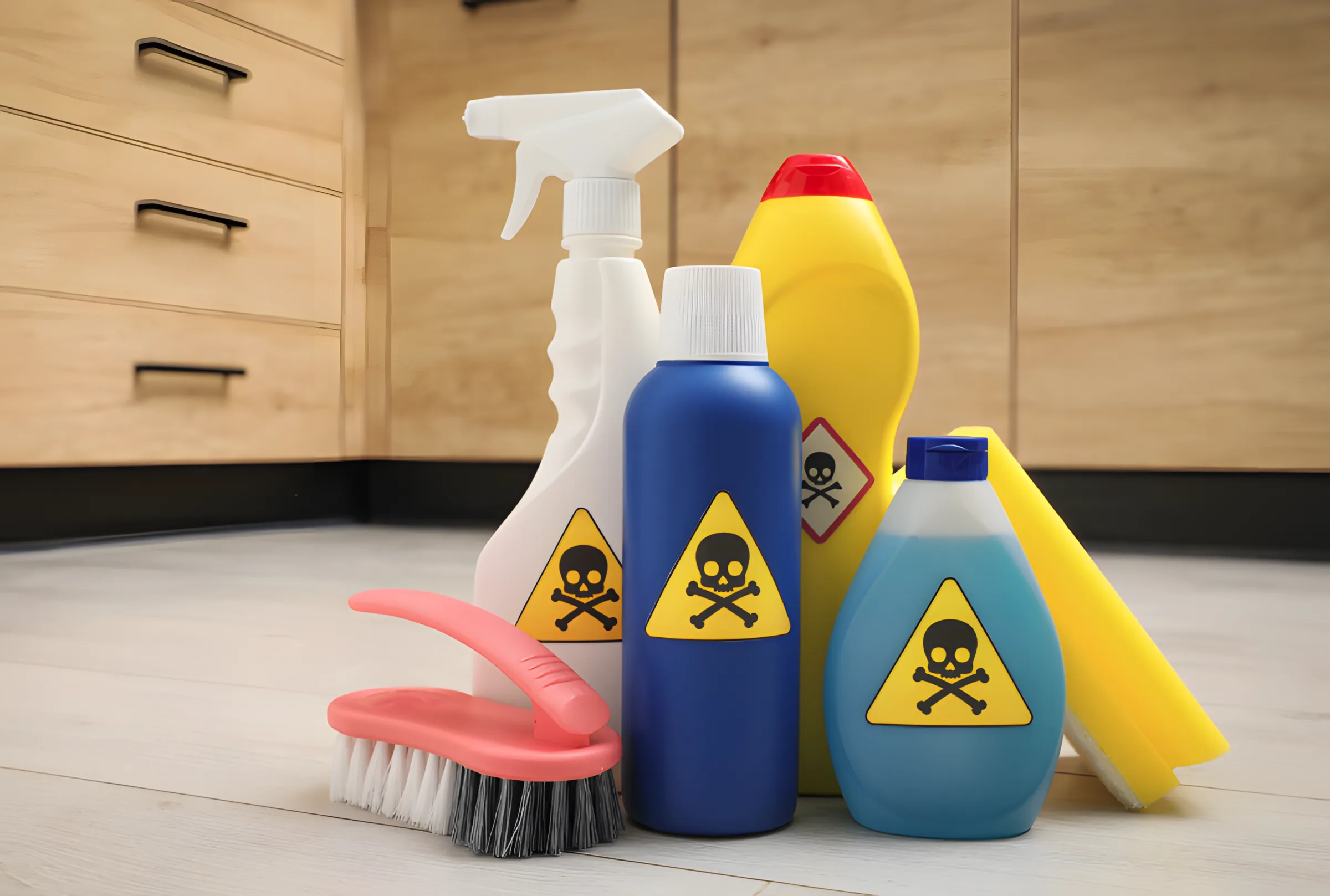
Yes, in most cases you do. If a cleaning product carries a health hazard symbol on its label, it counts as a substance hazardous to health and COSHH applies, no matter how ordinary the product seems. How detailed your assessment needs to be depends on how the product is used.
This catches a lot of businesses out. Offices, shops, schools, care homes and food premises all assume COSHH is for factories and chemical plants. In practice, bleach, drain unblocker, oven cleaner, descaler and many everyday disinfectants are all in scope.
What COSHH actually covers
The Control of Substances Hazardous to Health Regulations cover substances that can harm health in any form, including:
- Chemicals and products containing chemicals
- Fumes, dusts, vapours and mists
- Gases, including asphyxiating gases
- Biological agents such as bacteria and other germs
- Nanotechnology
The simplest test is the label. If the packaging carries a health hazard symbol, such as corrosive, toxic, the exclamation mark or the health hazard symbol, the product is in scope. A product that only carries the flammable symbol is a fire risk, covered by separate regulations (DSEAR), rather than a COSHH issue.
What COSHH does not cover
Three things are excluded because they have their own regulations:
- Lead, covered by the Control of Lead at Work Regulations
- Asbestos, covered by the Control of Asbestos Regulations
- Radioactive substances, covered by separate radiation legislation
If you find any of these, COSHH is not the right route and the duties are stricter.
Which cleaning products need assessing
Not every product in the cupboard needs its own assessment, but more will than you expect. As a rule of thumb:
- Needs an assessment: bleach and chlorine based cleaners, drain and oven cleaners, descalers and acid based washroom cleaners, concentrated disinfectants, solvent based products, anything diluted from a concentrate
- Usually does not: hand soap, most ready to use surface sprays with no hazard symbol, plain water based products
Concentrates deserve particular attention. A product that is harmless once diluted can be corrosive in the bottle and the person decanting it is the one at risk.
Do you have to write it down?
If you have five or more employees, you must record your COSHH assessment. Below that, recording is not legally required but it is still sensible and most clients and insurers will ask to see it anyway.
Your record should set out the substances, who is exposed and how and the control measures you have put in place.
How to assess a cleaning product properly
A COSHH assessment breaks down into four steps.
1. Identify the hazards
Get the safety data sheet from the supplier. Suppliers of hazardous products for work use must provide one free of charge. If you buy from a supermarket or cash and carry, download it from the manufacturer's website or ask for it. Section 2 tells you the hazards and section 8 tells you the exposure controls.
2. Assess the risks
Think about who is exposed, how (breathing it in, skin contact, splashes to the eyes, swallowing), how often and for how long. A cleaner using a product daily in an unventilated toilet block is in a very different position to someone using it once a month.
3. Control the risks
Work down the hierarchy. Can you stop using the product? Can you swap it for something less hazardous? Can you buy it ready diluted so nobody handles the concentrate? Only after those do you get to ventilation, safe systems of work and, last, personal protective equipment.
4. Record and review
Write down what you found and what you did about it, then review it when the product, the task or the people change.
Common mistakes
- Filing the safety data sheet and calling it an assessment. The data sheet describes the product. The assessment describes your use of it. They are not the same thing and an inspector will spot the difference immediately.
- One assessment for the whole cleaning cupboard. Different products, different hazards, different controls.
- Forgetting decanting and dilution. This is where a lot of cleaning injuries happen.
- No safety data sheets on file. You need them and they should be current.
- Nobody told the cleaners. An assessment that stays in the office has not controlled anything.
How TalkHSE helps
TalkHSE gives you a COSHH register and a Safety Data Sheet library in one place. You upload the supplier data sheets, build the assessment against the actual task rather than just the product and keep both linked so the people doing the work can see what applies to them.
Because the assessments sit alongside your risk assessments, method statements and toolbox talks, the controls you decide on can be pushed out to the people who need them rather than sitting in a folder.
Frequently asked questions
Do I need a COSHH assessment for washing up liquid?
Check the label, because many carry a warning for eye irritation. If it is used at work in the same way and as often as you would at home, the risk is low and following the label is usually enough. Where it is used heavily, such as in a commercial kitchen, assess it.
Is a safety data sheet the same as a COSHH assessment?
No. The safety data sheet comes from the manufacturer and describes the product. The COSHH assessment is yours and describes how the product is used in your workplace and what you do to control the risk.
How often should COSHH assessments be reviewed?
There is no fixed interval. Review when the substance, the process or the people change, after an incident, or if you have reason to think the assessment is no longer valid. Many businesses also set an annual check as a backstop.
Who can carry out a COSHH assessment?
Anyone competent to do it. That means someone who understands the substances, the tasks and the controls. It does not have to be a consultant, but it does have to be someone who knows what they are looking at.
What happens if you do not have COSHH assessments?
It is a breach of the regulations. In an HSE visit it can lead to a notification of contravention, an improvement notice and cost recovery under Fee for Intervention. It also undermines any defence if someone is harmed.
More Articles